
Mississippi Records for a Resident Lookup
No single public file in Mississippi ties every detail of a life together. Each record answers a different question. A county tax roll identifies the assessed owner of a parcel. A voter service lets a person confirm a personal registration. A court docket shows participation in a case. A license lookup confirms a professional status. A business filing shows who stood behind a company. Every one of these records sits with its own custodian, its own date, and its own access rule. Pick the record that fits the question. Then check a second source before concluding anything about a living person. That habit is what makes a resident lookup trustworthy.
| Record | What It Confirms | Where to Search | Access |
|---|---|---|---|
| Assessor roll | Assessed owner, parcel, mailing and situs details | County assessor or GIS | Parcel fields are generally public; not a household list |
| Deed or instrument | Grantor, grantee, legal description and recording date | County Chancery Clerk; courthouse; selected archive images | Public land record; copy fees and online coverage vary |
| Voter registration | Registration status, precinct and district fields | Y’all Vote self-verification; Circuit Clerk; weekly SOS file | Private fields are withheld; file use is restricted |
| Court docket | Party, case type, filing and docket events | County clerk, MEC/PAMEC, MDAH or PACER | Public docket access varies; sealed and protected matters stay closed |
| Vital record | Birth, death, marriage or divorce event | MSDH and the relevant county clerk | Eligibility, identification and time limits apply |
| Probate | Estate, executor, heirs and filings | Chancery Clerk, MEC, MDAH or FamilySearch | Many filings are public; confidential portions are excluded |
| Business or license | Entity role or published credential status | Mississippi SOS STAR and licensing boards | Affiliation is not proof of residence |
For a current property question, go to the county assessor first. Skip the commercial people-search summary for that. Assessor pages and property rolls differ widely from county to county. For court or election records, route by county through the State and County Directory. Mississippi's 82 counties keep many records in local offices. Pulling from the wrong county can miss the person entirely.
Start a Mississippi Resident Lookup
Decide what actually needs checking before you search. A current owner, an election registration, an old court case, and a family relationship are four different questions. One match should never become a broad claim about where someone lives. In Mississippi, an assessor's mailing address may sit far from the parcel's situs address. A docket address may be years stale. Any street directory entry is just a dated snapshot. Write down the county. Note the date range and the exact fact you need before starting the lookup.
- Search the county assessor’s roll by the name or parcel information you already have. Record the owner name, situs, mailing address, parcel number, and date viewed.
- Use the county Chancery Clerk’s land index to confirm a deed, legal description, or recording date. Ask the clerk which online images are official and which require a courthouse terminal or copy request.
- Compare a second independent record, such as a court case number, business filing, or a person’s own voter verification. Check the county and year, not just the spelling of a name.
- If the question needs a certificate, contact the agency that holds that record and follow its eligibility, identification, and payment steps.
- Keep a source and date beside each result. If two records disagree, ask the custodian how to correct or clarify the official entry.
For an address-by-address sweep, follow the Mississippi street directory workflow. A one-person search stays narrower, joining only the records that answer one question and stopping where privacy rules begin.
Mississippi Mailing and Situs Addresses
An assessor entry often lists an owner's mailing address. It also lists a parcel's situs address in a separate field. The gap is easy to miss. Two records can look nearly identical while meaning different things. The owner may simply get mail elsewhere. Or the owner may hold the land through an entity, or have never updated the record. A tax-roll mailing address helps locate the owner within a property record. It does not prove a current home or show who occupies the parcel.
Compare the legal description and parcel number against the deed, then date the result. County assessor pages vary. So use the official county directory to find the right assessor or clerk. This small check keeps a property roll from being mistaken for a person's present address in the residents directory.
Verify Names in Mississippi Records
Mississippi indexes vary names in ordinary ways. A middle initial disappears. A married name replaces a birth name. Older records may shorten a given name. Some spell a surname phonetically. WPA Soundex material can group names by sound, including alternate Mc and Mac forms. Search the sensible variants. Treat each hit as a lead rather than a confirmed identity.
Then compare at least two details drawn from independent records. A county and legal description can separate two owners who share a name. A court party role and filing year can distinguish a parent from a child. For an estate, set the person named in probate beside an executor or an heir. A residence listed in an obituary works too. Dates carry weight here. A deed records one transaction, while a voter roll entry reflects a registration that may change later.
| Record detail | What it can show |
|---|---|
| MDAH court-case result | Party names, case title, court series, year, case number, call number, box, location, or microfilm roll when cataloged |
| County docket | Party role, case number and type, filing date, docket entry, judgment or disposition when the local portal displays it |
| Assessor parcel | Assessed owner, situs, mailing address, parcel ID and legal description, subject to county field differences |
| Voter record | Registration status, residence and mailing fields, precinct, districts and election-history metadata in the official file |
| Probate file | Testator, heirs, executor or administrator, residence, inventory, witnesses and record date in available filings |
- Docket
- A court’s list of filings and events in a case. It is not always the full case file.
- Index and image
- An index helps locate a record; an image is a view of the underlying document and may require a fee or account.
- Certified copy
- A copy issued with the custodian’s seal or certification for a purpose that requires an official copy.
Mississippi Court Names and Dockets
Mississippi court records are split by court and by county. Circuit Clerks keep local circuit and county court files. Chancery Clerks hold chancery, probate, and land matters. Municipal and Justice Court searches stay local, and each portal exposes different fields. A person or case may belong to another county. The Secretary of State's county directory helps identify the right clerk.
If no online docket appears, call or visit the correct clerk. Bring the case number, party names, court, and approximate year. Ask whether a docket copy, a specific filing, or a certified copy is available. Fees and retrieval time vary by office, and some electronic documents require a court-specific account.
The Mississippi Electronic Courts environment serves participating courts. However, a login or filing account is not a free public name search. The MEC/PAMEC registration screen lists Attorney, Non-Attorney, and Firm Administrator account types. Attorney and Non-Attorney registration carries a $10 annual fee, and an account activates after payment. Some queries still require credentials. Certain document views are limited to attorneys of record or parties. The MEC registration screen shows the account choices and fee notice. Read it before any court search begins.
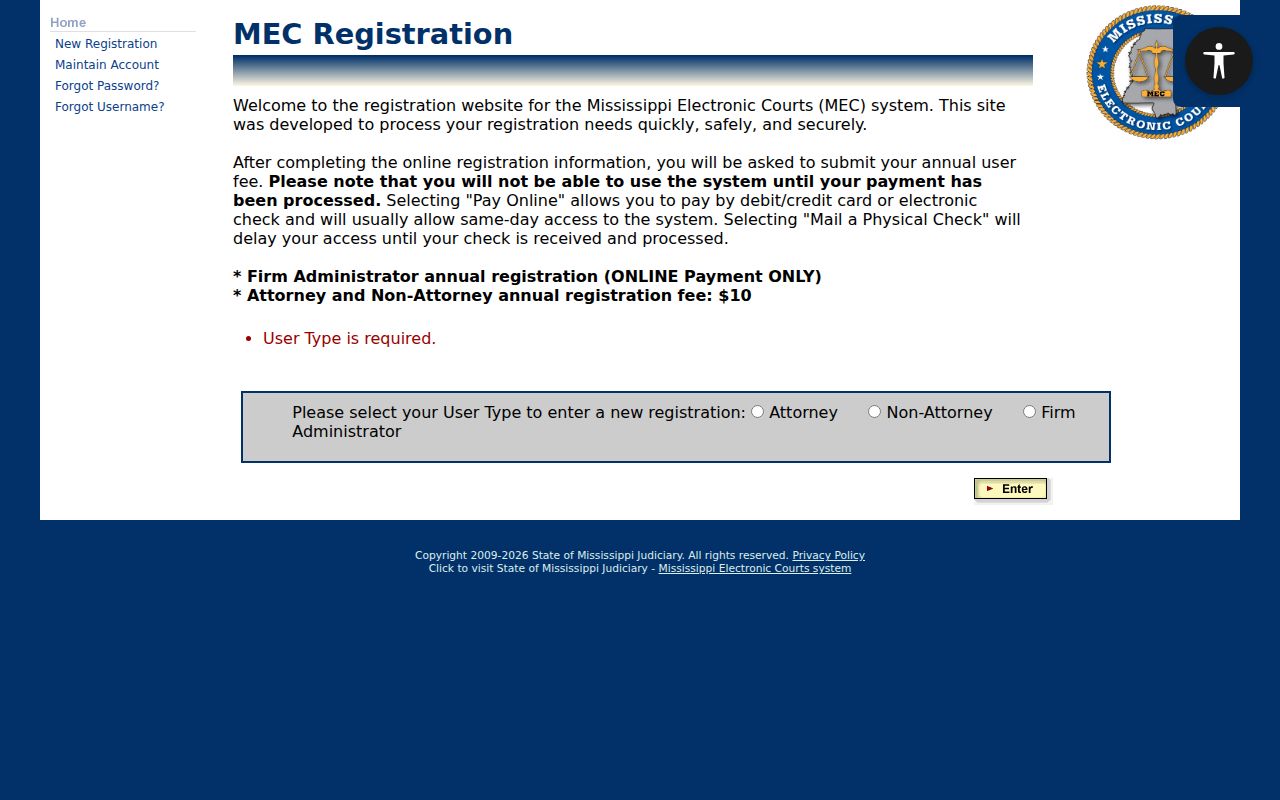
A separate MEC login screen requests a username and password and offers account recovery controls. The public-facing sign-in confirms the entry route, not a statewide browse of every party name.
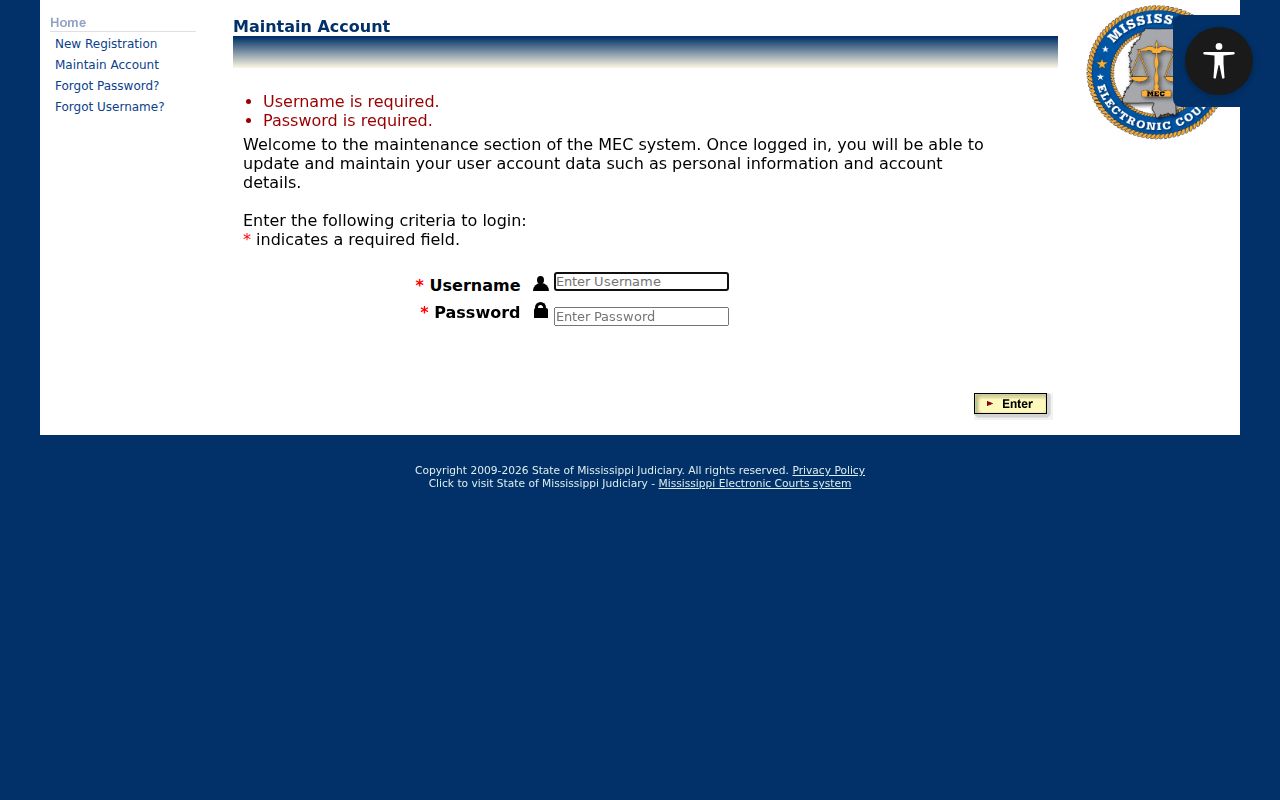
The login screen is the boundary. For a docket that an unauthenticated view will not show, ask the county clerk directly.
Older cases take a different path. The MDAH court-case database can return a catalog entry carrying a call number. It can also return a box location. Search by name, place, or company. Then request the file in the Archival Reading Room. Microfilm may be self-serve in the Media Room. Federal matters run through PACER, which requires an account and charges for many pages. Remember that a missing online result does not prove no case exists.
Mississippi Vital Record Access
Birth, death, marriage, and divorce records do not share one open index. The Mississippi State Department of Health Bureau of Vital Records maintains births and deaths from November 1912 forward and marriage statistical records from 1926. Access is limited under Miss. Code Ann. §41-57-2 and MSDH rules by record type, requester eligibility, identification, and tangible interest. For a birth certificate, MSDH lists the adult registrant, listed parent, spouse, sibling, grandparent or child, legal guardian or representative, qualified agency, or a requester with a court order as eligible routes, subject to its rules. Birth records become available for genealogy after 100 years and death records after 50 years, as plain-paper genealogy copies rather than unrestricted certified certificates.
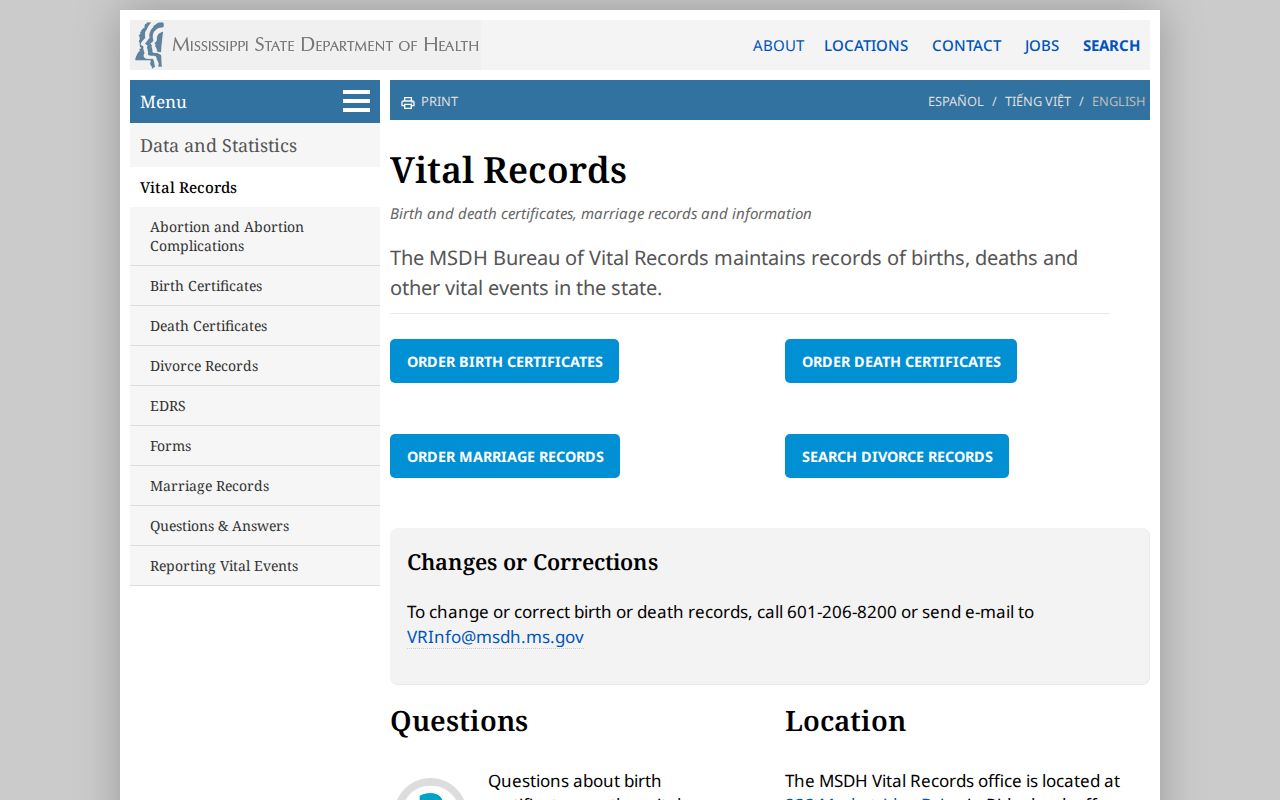
The MSDH Vital Records office accepts requests online, by phone, by mail, and in person. Mail goes to Mississippi Vital Records, P.O. Box 1700, Jackson, MS 39215-1700; the counter is at 222 Marketridge Drive in Ridgeland, and staff can be reached at 601-206-8200 on weekdays from 8 a.m. to 4 p.m. An eligible applicant generally submits an application and a copy of valid photo ID, plus proof of relationship or representation when required. The standard certificate or search fee is $17, with $6 for another copy in the same order. The search fee is not refundable when no record is found, and standard processing is usually 7 to 10 business days.
The MSDH page lists separate birth, death, marriage, and divorce routes alongside the Ridgeland office information.
Marriage copies from July 1938 through December 1941 live only with the county Circuit Court Clerk. Those arrive by mail. Same-day walk-in copies are not issued for that span. MSDH divorce verification covers January 1, 1926 through June 30, 1938. It also covers January 1, 1942 forward. The decree itself comes from the county Chancery Clerk. Older family research turns to MDAH. MDAH holds death microfiche from 1912 through 1943, a WPA marriage index before 1926, and county microfilm. FamilySearch coverage and images vary by county. A public-records request cannot bypass the application rules for these records.
Mississippi Voter Lookup Has Limits
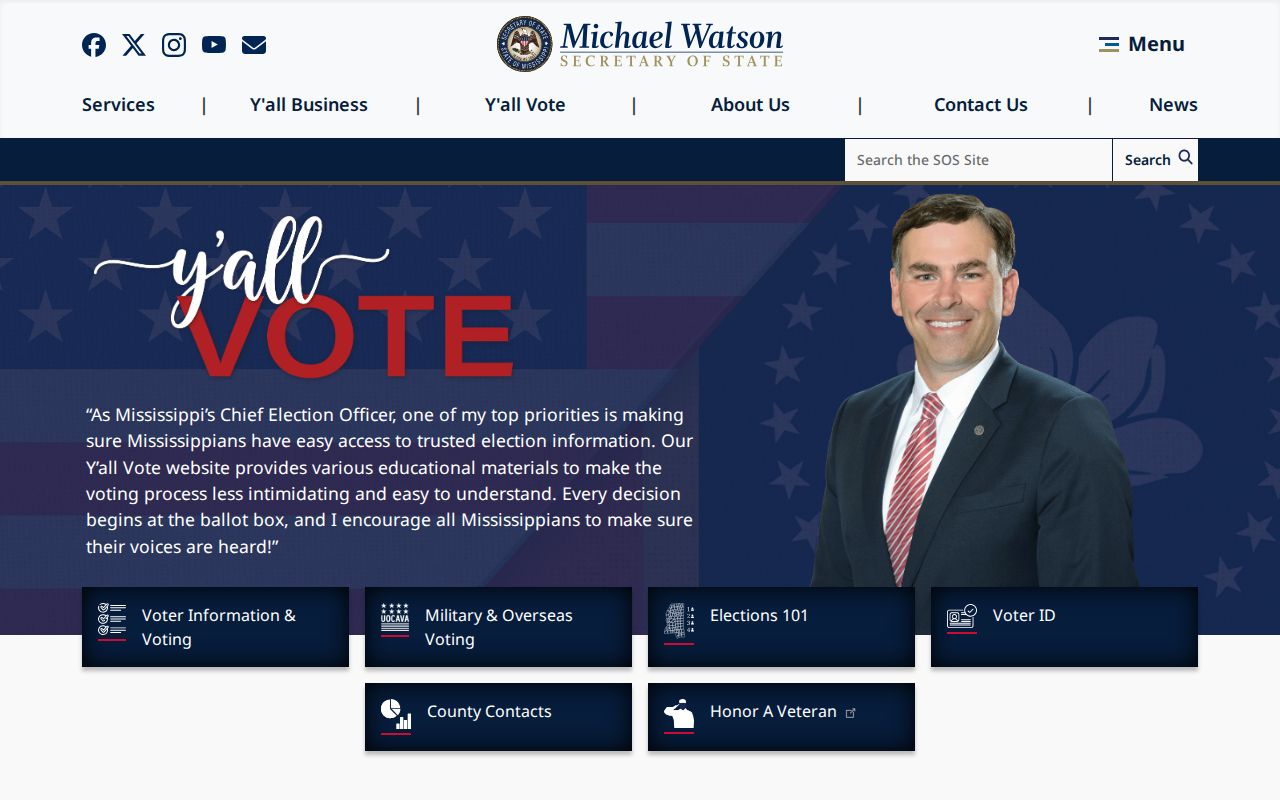
A voter should verify their own registration through the Secretary of State's Y'all Vote hub. The hub links to the separate MSEGOV verification service. Exact-match personal details and an authentication step guard the process. It is not a public name-and-birthdate browsing tool. When online verification fails, the county Circuit Clerk serves as local registrar. The SOS elections hotline offers another route.
The official Y'all Vote hub groups registration verification with election-day tools and voter updates. It lets the voter pick the right task.
The MSEGOV verification service may ask for private authentication details that are not public voter-file fields. The live service may change its exact controls. Treat that as a private step. A birthdate or last-four prompt is never permission to seek those details about another person.

Mississippi distributes a weekly statewide voter file as CSV files to signed-up recipients. There is no cost. Listed fields can include name, residential and mailing addresses, county, precinct, status, effective registration date, last-voted date, district assignments, and election-history metadata. Ballot choices never appear in the history file. Miss. Code Ann. §23-15-165 and SOS rules exclude SSN, birthdate and age, driver-license number, phone, email, voter number, and other protected fields. SOS rules also restrict solicitation and misuse. An inactive voter is not a deleted record. Ask the Circuit Clerk to clarify a status before assuming anything.
For a bulk file outside the weekly distribution, the SOS public-records request form accepts mail, hand delivery, fax, or email requests. Describe the file clearly. Do not ask for exempt fields. One-off requests can carry search, review, and reproduction costs, and advance payment is required in some cases. A voter who needs only their own record can call or visit the county Circuit Clerk instead.
Mississippi Probate and Family Links
Probate paper is often the best official thread. It ties a deceased person to an executor, heirs, a residence, an inventory, and later property transfers. Start at the county Chancery Clerk. Then check MEC or a county terminal. Also try the MDAH genealogy holdings or the FamilySearch Mississippi probate collection. A probate petition, a will, or an estate inventory can name relatives outright. Sealed or confidential portions stay closed. When a surname matches, resist the easy guess. Pair the heir’s name with a deed, an obituary, or a later tax record. Only then conclude two people are kin.
Adoption works differently. Mississippi keeps adoption records confidential under Miss. Code Ann. §§93-17-203 through 93-17-223. The lawful route runs through MSDH or the court. A qualified agency or intermediary may qualify too, depending on eligibility. Public name indexes will not open a sealed file. For an old classmate or community figure, other trails exist. School yearbooks, MDAH catalogs, local libraries, newspapers, cemetery indexes, and historical directories all help. When no searchable online copy exists, MDAH reference staff offer an in-person fallback. Media Room microfilm also serves the residents directory crowd willing to travel.
Family-history records can establish relationships and dates. Each source speaks to a particular time and purpose, but together they build the picture.
Mississippi Business and Status Records
The Secretary of State’s STAR business portal lets anyone search for an organization or an individual. A profile may carry entity status and filing dates. It may also list a registered agent, officers, managers, or a principal office address. Professional boards add license numbers, cities, status, and discipline fields. An officer, agent, or license holder can still live somewhere else entirely. Treat these entries as affiliation facts, not proof of a home address. For UCC filings, note the split. The basic search differs from the subscription service that carries detailed filings and images.
Custody databases have narrower meanings still. The MDOC inmate search form takes a first name, a last name, or an MDOC ID. It answers a custody question, not a residents directory question. County jails each run their own sheriff-run systems. So Mississippi publishes no single statewide county-jail roster.
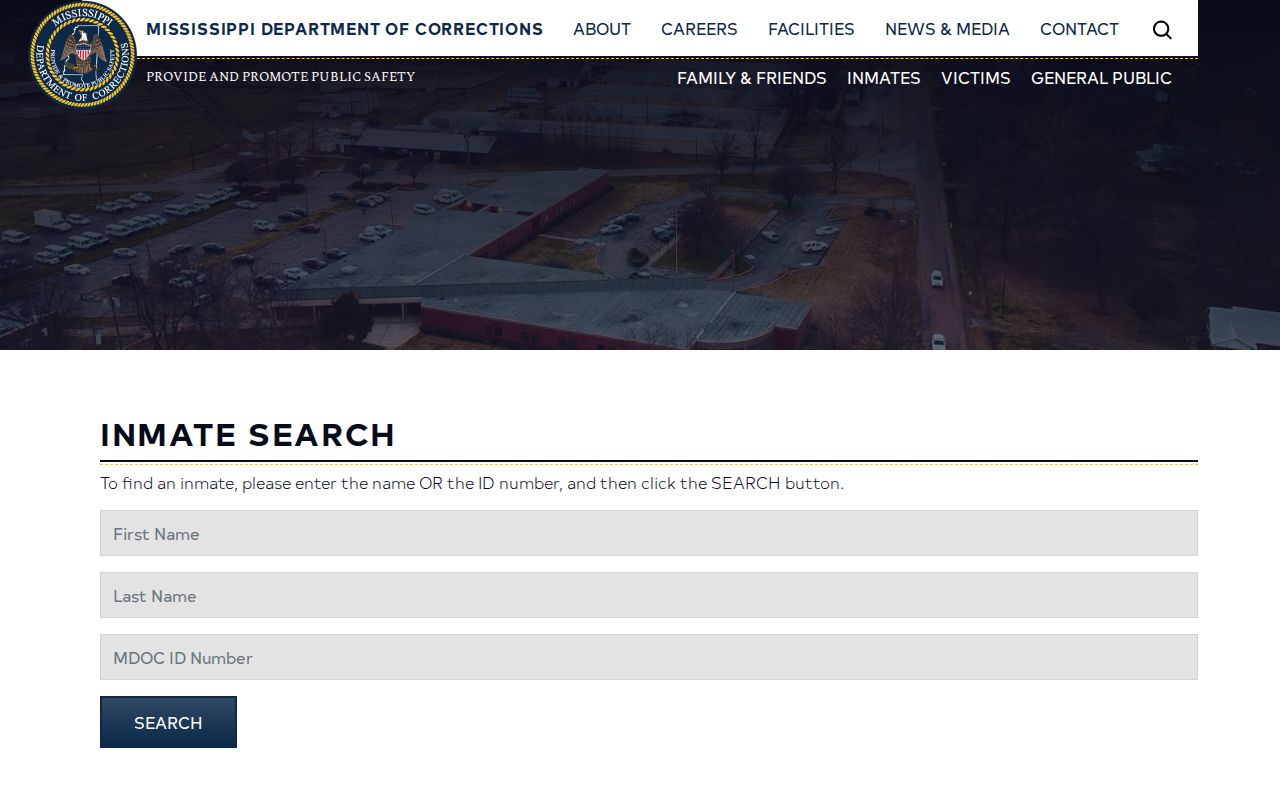
Those fields answer a custody query only. A county jail sits on its sheriff's own system. Neither tool establishes a general present address for a street directory search.
The Mississippi Sex Offender Registry offers name and geographic search modes. Inclusion follows conviction and state-law rules, not a mere arrest. The agency cautions that a name, birthdate, or photo comparison alone is not a conclusive identity match. It is not conclusive without fingerprints. Never use registry data to infer a present home. Never use it to contact, monitor, or expose anyone.
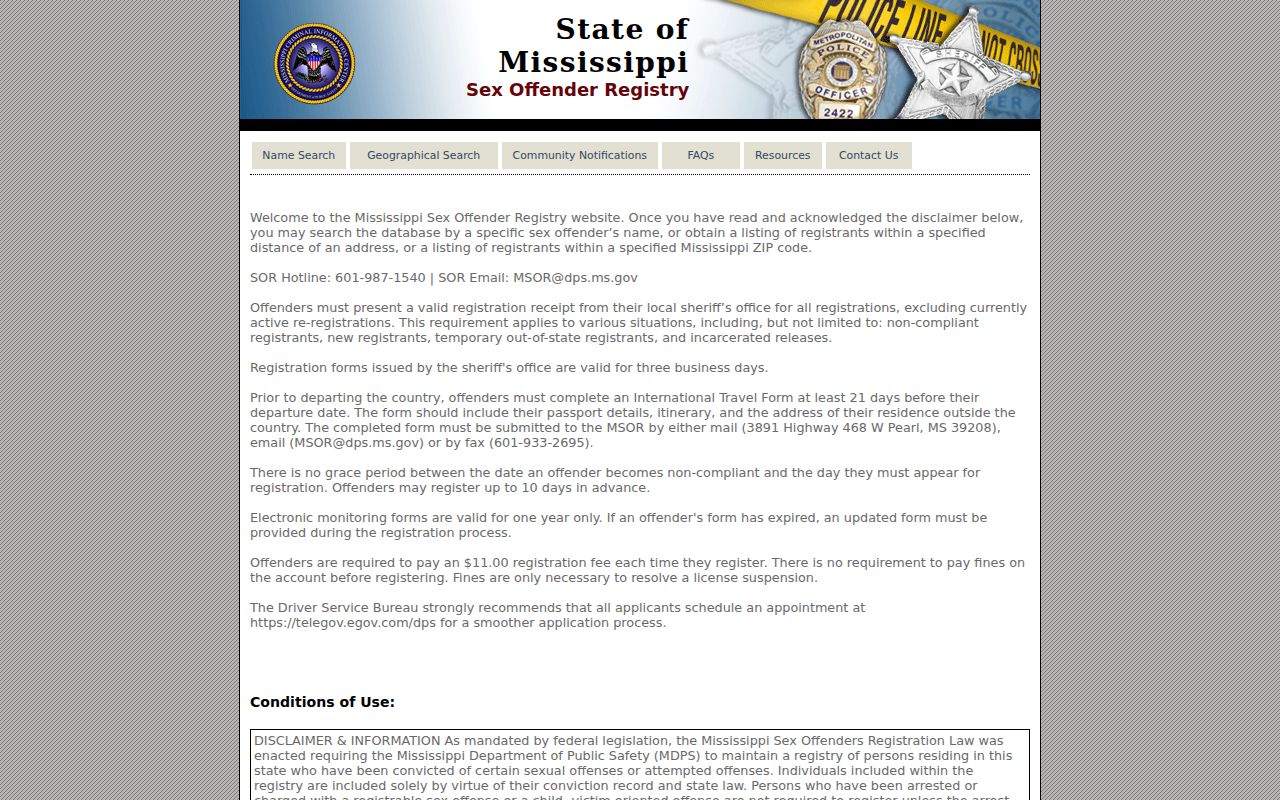
Note: The registry’s own disclaimer urges confirmation of any identity question with the proper custodian rather than treating a registry result as a present-residence finding.
Mississippi Resident Lookup Privacy Limits
The Mississippi Public Records Act, Miss. Code Ann. §§25-61-1 through 25-61-19, opens non-exempt records, not every detail an agency holds. A public body with written procedures should respond to a written request within seven working days. Production ordinarily should not exceed fourteen working days unless the requester agrees. Fees stay limited to actual search, review, duplication, and mailing costs. Advance payment may be required. A request must identify a record. It cannot turn a restricted vital file, private voter field, or DMV address into an open directory.
Mississippi shields residential addresses for some law-enforcement officers, judges, prosecutors, victims, and Address Confidentiality Program participants. The Attorney General administers the program under Miss. Code Ann. §99-47-1. The Public Records Act also preserves exemptions. Vital statistics, individual tax information, juveniles, medical records, and confidential files stay closed. DMV personal information carries separate federal limits under the Driver's Privacy Protection Act. When an entry is wrong, contact its custodian: the Circuit Clerk for voter status. Contact MSDH Amendments for a vital record, or MDPS for registry data.
Lawful use. Use a Mississippi resident lookup for a specific personal or family-history question. Do not use public records to stalk, harass, threaten, or reveal a protected person’s address.